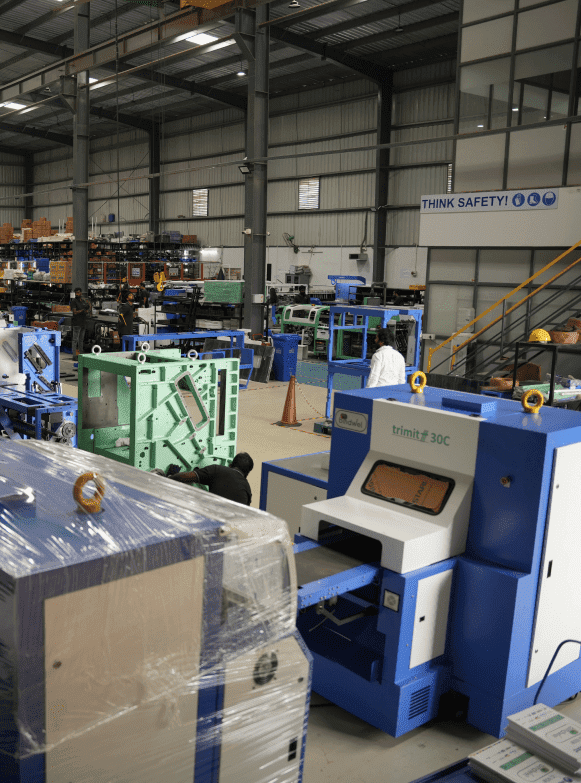
If you were building a book plant on a blank site today, what would you leave out? That question opens the publisher printer roundtable Bindwel is hosting on 27 November 2026, in New Delhi. The first session is titled “If I built my factory again today”, and the rest of the evening follows from it. The annual event is now in its fourth year.
What publishers are asking for
Ask a publisher what a printer should deliver and the list is short: fewer print delays, less wastage, a lower cost for every book, and binding and print quality that stays consistent. Whether a plant delivers any of it, or loses it, is decided on the printing floor.
The roundtable is built on that list. What publishers need from printers comes first, and only then does it ask what shape the next book factory should take.
Cost, wastage and delay rarely trace back to one machine. They accumulate in three places:
• how the plant is laid out
• how many times a book is handled from the first sheet to dispatch
• how late a quality problem comes to light
How plants grew, and what the table will test
Bindwel notes that many book production facilities have grown in stages, as new binding lines, folding equipment and presses came in over the years. The forum will ask how to handle books less, hold less work-in-progress inventory, cut production delays and catch defects earlier.
The wider question for the publisher printer roundtable is how a book manufacturing plant would be planned and run if it were designed from scratch today. Five areas frame the discussion: productivity, quality control, workflow integration, plant layout, and how closely the plant matches what publishers require. Bindwel’s own thinking on the same question is set out on its Next Book Factory page.
Following one book through the plant
The agenda takes a single book’s path: pre-press, printing, binding, inspection, dispatch. Along the way, participants will take up plant design and in-line quality assurance. Also on the list: simpler processes, workforce deployment and the manufacturing priorities of future facilities.
Quality control topics on the agenda include:
• glue inspection
• traceability systems
• signature recognition
• barcode and QR-code verification
Remove a step before you automate it
A separate strand asks whether a step can be removed rather than automated. Participants will assess whether changing the materials, adhesives or finishing methods used could make some production processes unnecessary, before investment goes into automation.
Who is in the room at the publisher printer roundtable
Two of the participants are Shashi Ranjan, CEO of Manipal Global Print Solutions, and CDC Printers director Manu Choudhury. Technical specialists, print manufacturers and publishers will sit alongside them.
Bindwel is hosting and organising the evening, in partnership with Henkel and PrintWeek. It is invitation-only. In the room, Bindwel convenes the discussion as a facilitator.
Earlier editions of the roundtable have taken up the opportunity for Indian book manufacturing, innovation and changing practices, and quality and process.
How the evening runs
The evening opens with “If I built my factory again today”. Publishers follow, speaking for themselves about what tomorrow’s printer must offer them, including the lower cost, lower wastage and fewer delays described above. A table exercise then connects those requirements to manufacturing solutions. Next-generation printers answer in turn, naming which parts of their plants they would keep and which they would change. The evening closes with takeaways, ahead of dinner.
For a plant that grew one machine at a time, the publisher printer roundtable puts a plain question on the table: of everything on the floor today, what would you build again, and what would you not?
👉 Follow Bindwel on Facebook, LinkedIn, Twitter, Instagram and YouTube for Digital Print Asia 2026 and machine insights, and practical updates from the print floor